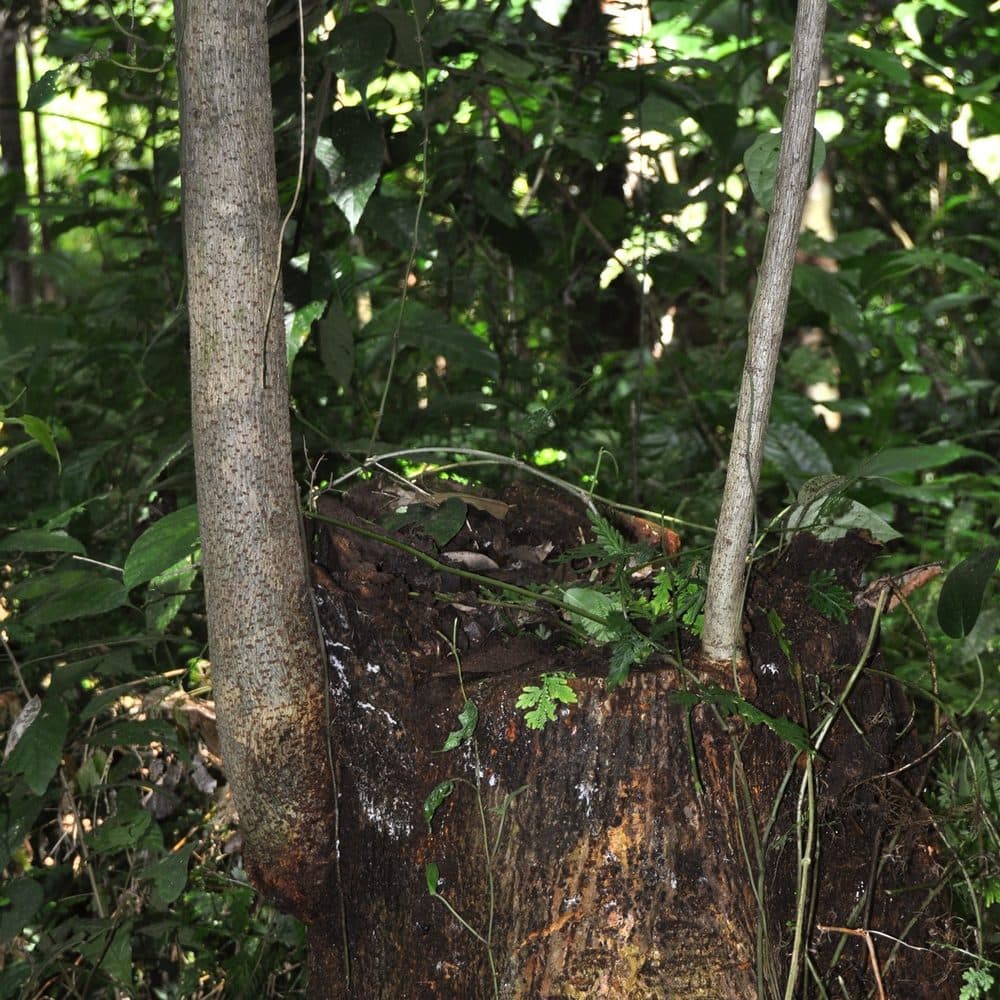
A correctly identified Antiaris toxicaria, photographed in Indonesia where the same pantropical species also grows — a Ghana-sourced photograph is still to come.
Akan
Kyenkyen
Bark Cloth Tree
Antiaris toxicaria
Where It Grows
High-forest belt across southern Ghana
— — Kyenkyen doesn't lend its name to a known Ghanaian town the way Odum or Onyina do — its legacy lives in the cloth it made, not the map.
Approximate — anchored to the nearest known place name.
Explore full map →Why It's Protected
Long before woven kente, Akan communities beat this tree's thick inner bark into kyenkyen — a durable cloth worn and used well before cotton textiles were widely available; standing trees are still valued for a practice that predates the loom.
Uses & Benefits
- —Inner bark beaten into kyenkyen cloth, a forerunner to woven textiles
- —Sap and bark used in traditional medicine
- —Coarse bark fibre for wrapping and cordage
If you would not let a human being die, why would you let a forest burn? Every material is alive — the tree is not a metaphor. The tree is ancestor.
See the Nipa Dua Foundation's environmental work →