Established MMX · Accra, Ghana
Nana Ananse Nipadua Art Foundation
Archive. Preserve. Contemporize.
We are an archive of living memory. We are a conservatory of indigenous practice. We are a laboratory of the future — the African future, built from African roots.
The foundation does not "help" communities. We hold them. We hold their knowledge, their practices, their ways of seeing, their ways of being with the land — not in glass cases but in living practice: taught, performed, grown, and returned to the earth that made them.
Our core work is three movements, one breath: Archive, Preserve, Contemporize.
Archive
We gather indigenous African practices, philosophies, sustainability systems and narratives before they are lost to colonial erasure, urban displacement and generational rupture.
Not a Western archive of dead objects. We archive living relationships — between elder and youth, between human and land, between ritual and daily life.
Preserve
We keep these practices in active use — in the garden, in the kiln, in the ceremony, in the body. Preservation is not freezing; it is tending, like a tree that must be pruned, watered and witnessed.
Not museum preservation behind glass, and not cultural appropriation — not freezing practice in time while the world moves on.
Contemporize
We translate indigenous knowledge into the language of now and the vision of tomorrow — for the modern generation, in contemporary form, toward the futuristic African world we want to see.
Not dilution. Not stripping practice of its spiritual core to make it "palatable." We contemporize the form, not the truth.
Disability & Inclusivity: The Indigenous Lens
The Western model names, diagnoses and excludes. The African indigenous model recognizes, accommodates and integrates. The tree that grows crooked is not "broken" — it is responding to wind, to soil, to light. It is still tree. The human body that moves, senses or communicates differently is not "disabled." It is different terrain — valley, hillside, riverbed, stone, root. It is still human. It is still Nipadua.
- —Universal design from the first seed — building for all bodies from the beginning, not retrofitting for the few
- —Elders with mobility difference as knowledge keepers — their stillness is depth, not limitation
- —Artists with different terrains as teachers — they reveal what the rest of us have forgotten about body, material and time
- —Community as accommodation — the community rearranges itself to include, because ubuntu demands it
How We Contemporize
The Conservatory of Knowledge
The physical and digital heart of the foundation — recorded oral histories, documented rituals and body practices, catalogued sustainability systems, mapped sacred landscapes.
Access the Digital ArchiveEducation
The Conservatory teaches youth directly; Nipadua Schools run workshops in material literacy and ritual protocol; publications carry the practice to those who cannot sit at the elder's feet.
Browse PublicationsEco-Living & Organic Farming
Nipadua Eco Living is where people meet the land directly — organic farm properties, retreats and pilgrimage tours that are entered into as relationship, not consumed as tourism.
Explore Eco Tours & EventsDeclaration of the Foundation
We are not a charity. We are an archive of living memory.
We do not preserve in glass. We preserve in practice.
We do not contemporize by dilution. We contemporize by translation — same truth, new form.
We do not include the disabled. We recognize that every body is landscape, every landscape is body, and Nipadua leaves no one outside.
The foundation is the root. The forge is the trunk. The community is the canopy. All are one tree.
Our Story
An artist's declaration, built into a house
We, who call ourselves artists in an age of ecological collapse, declare that our practice must be more than making objects for markets. Art is not decoration, not commodity, not entertainment — art is relationship, ritual, remembrance.
Ananse Nipa Dua grew out of that declaration: a single practice — sculpture, textile, theatre, land — organised the way a tree organises itself, one trunk with many living branches, each rooted in the same conviction that the separation of human from nature is a fiction we no longer accept.
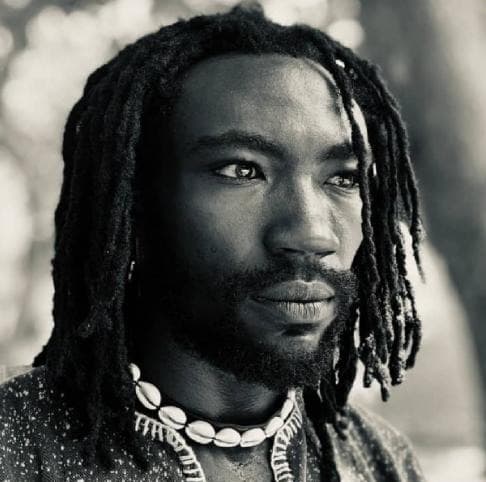
Nana Yaw Ananse
Kusi Ampem Darko — Artist, Educator, Activist
Born in Adanwomase, Kumasi, Ghana, Kusi Ampem Darko — known as Nana Yaw Ananse — is a multidisciplinary artist, educator and activist dedicated to harnessing the transformative power of art to promote environmental sustainability, social justice and community empowerment.
His artistic philosophy is rooted in transformation and renewal: art as a catalyst that inspires individuals and communities to reevaluate their relationship with the environment and each other. With over eight years of professional experience across sculpture, picture-making, theatre direction and choreography, his work has been shown in exhibitions across Ghana and beyond, alongside plays he has directed and choreographed.
- Education
— Winneba University of Education — B.A. Art Education
— Columbia University — Certificate, Rights of Indigenous Peoples
— University of Ghana, Legon — M.A. Performing Arts (Theatre & Choreography)
— University of Ghana, Legon — Ph.D. Candidate, African Studies
Claire
Specialist SEND Educator · 40+ Years
In a career spanning over forty years, Claire brings passion and joy to the world of SEND (Special Educational Needs and Disabilities) and music education. Her unwavering commitment to inclusion, creativity, and meeting the needs of every individual has been the driving force behind everything she does.
Read her full bio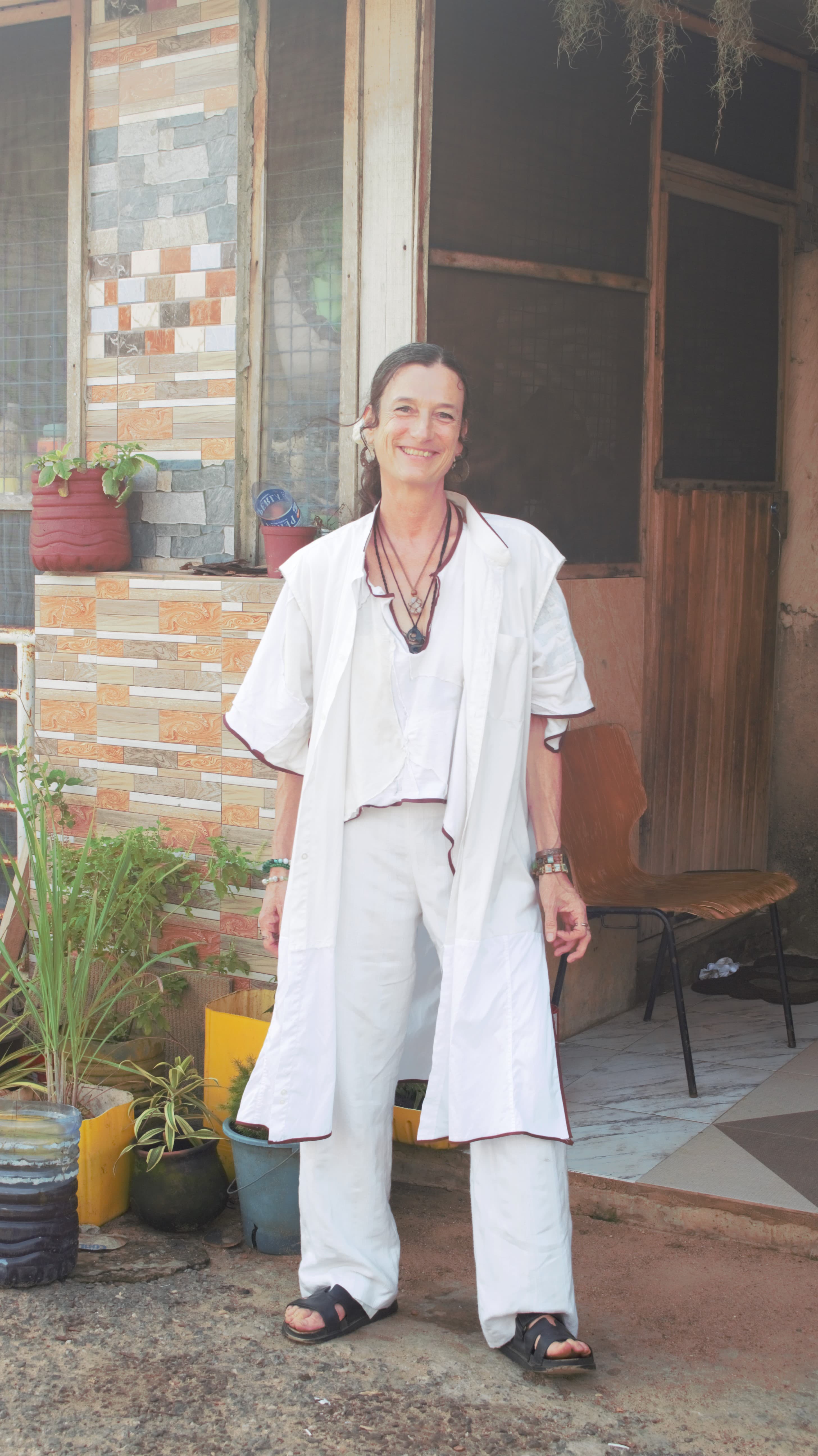
Nipa Dua
Nipadua is Twi: Nipa — the human, conscious, social, dreaming; Dua — the tree, rooted, branching, breathing, seasonal. Nipadua is not a metaphor but a revelation — the human body is the tree, the tree is the human body, both fragments of the same universe, rooted in the same earth, reaching toward the same sky.
Every artist working under this name carves, weaves and shapes their work into that single living tree — grown from story rather than soil.
Arts Bureau
Coming soon
The administrative and curatorial arm of Nipa Dua — the bureau that holds the exhibitions, tours, education and grant programs together under one roof.
Our Team
The people behind the bureau — artists, educators, organisers and community partners.
Meet the artistsOur Vision & Mission
Africa's indigenous civilizations offer alternative models to a civilization built on domination of nature: the managed forest instead of the walled city, the gift economy instead of the market economy, the ancestor's wisdom instead of the expert's data alone. This is not nostalgia — it is recovery of living philosophies colonialism tried to destroy, adapted to contemporary crises.
- — Living the Nipadua principle in our art and our lives
- — Honoring the land, the ancestors, the community and the spirits
- — Resisting extraction, domination and commodification
- — Building relationships of reciprocity and reverence
- — Creating works that grow, branch, season, die and regenerate
- — Teaching others the Nipadua way, and passing it to the next generation