Article · June 2026 · 11 min read
Human Anatomy and Environmental Sustainability Through Art
The human body is the tree. The tree is the human body. Both are fragments of the same universe, breathing the same breath. On Nipadua as not a metaphor but a revelation — and what that demands of a practice.
Nipadua is not merely a concept. It is a cosmology. In my mother tongue, the human body is called nipadua — "human tree." This tells us everything we need to know about how my ancestors understood existence. We have roots. We have leaves that breathe. We are not separate from nature; we are nature, temporarily arranged into consciousness.
I began with a simple, devastating question: with all we have been told is the "ideal" way to live — through imported frameworks that demanded we abandon our indigenous ways — has any of it truly worked? The answer, visible in the degradation around us, was no. So I looked to the etymology of my own tongue, to a science that existed before science had a name.
Energy cannot be created nor destroyed, only transformed. The nutrients we draw from plants are energies we cannot see but must believe in. When we die, we do not end — we decay into new forms, returning to the soil, to the plants, to the cycle. My ancestors knew this. They saw the human being as continuous with rock, with water, with the ceaseless circulation of energy that physics now confirms.
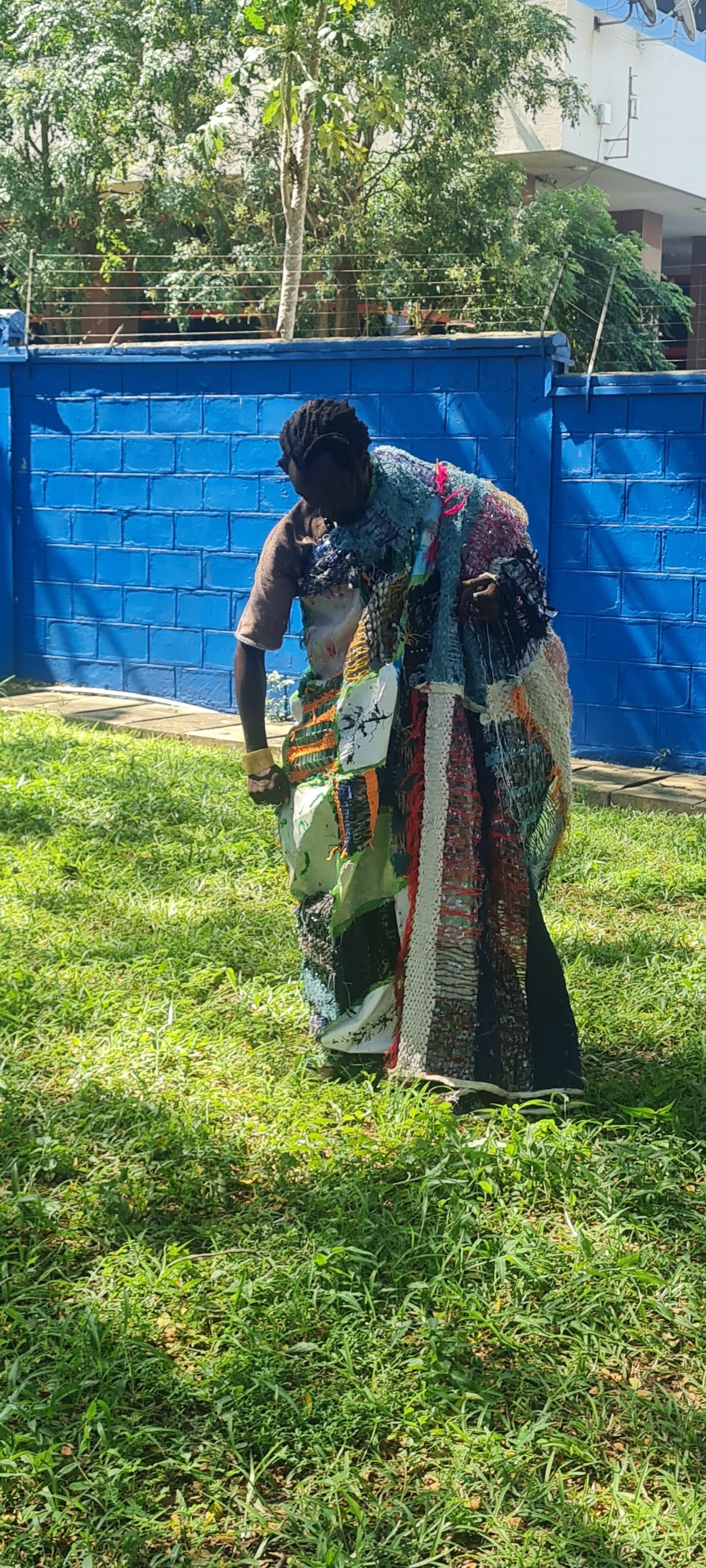
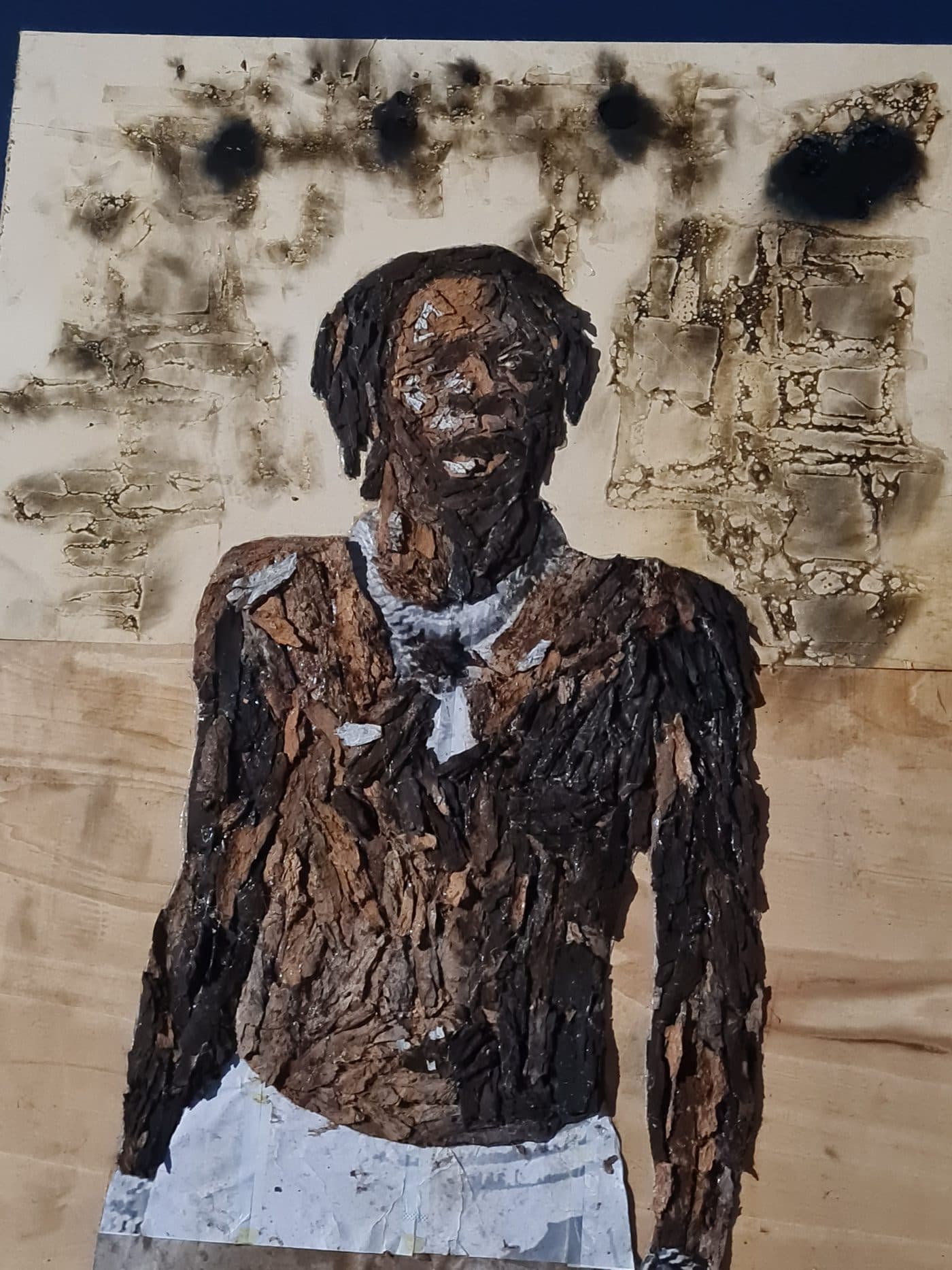
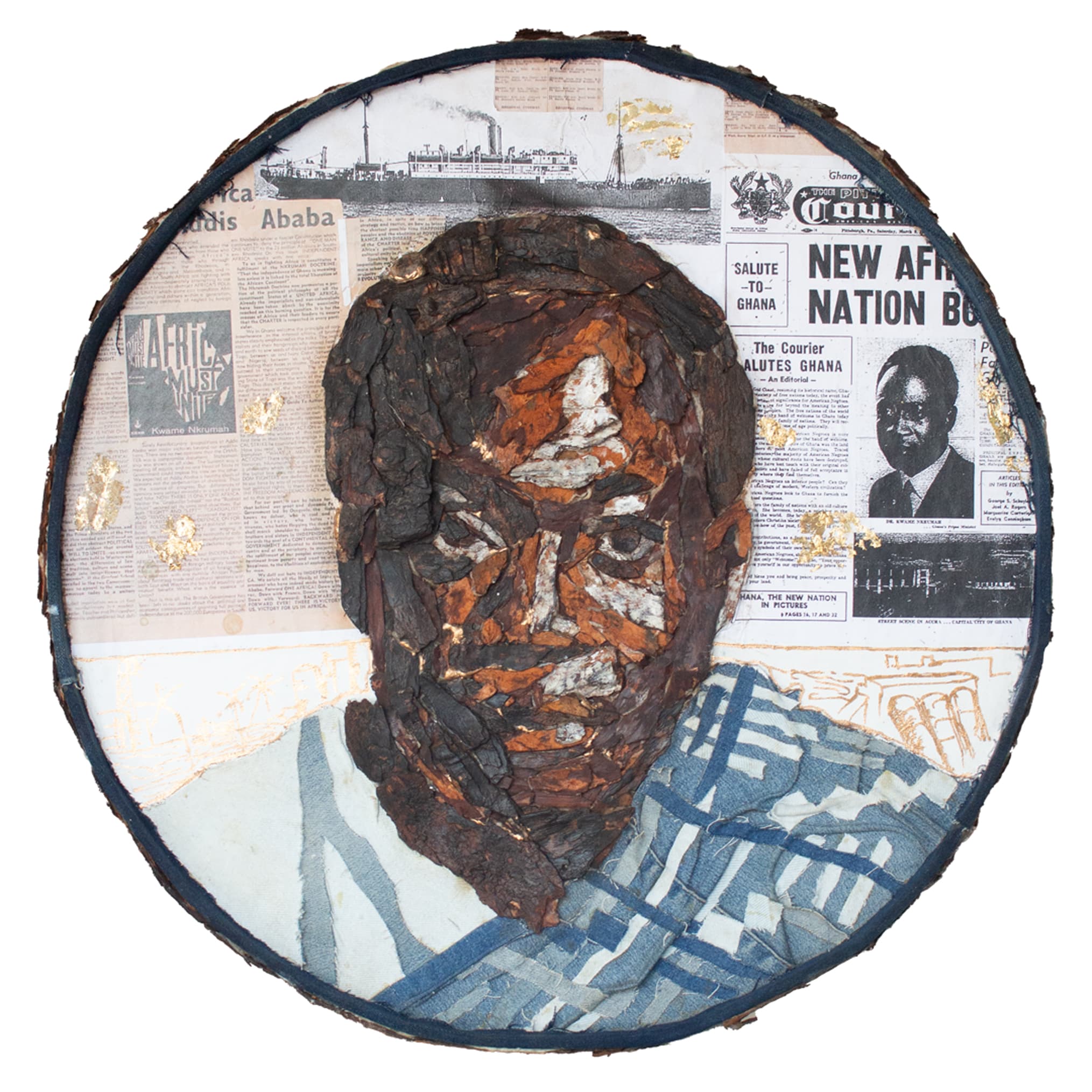
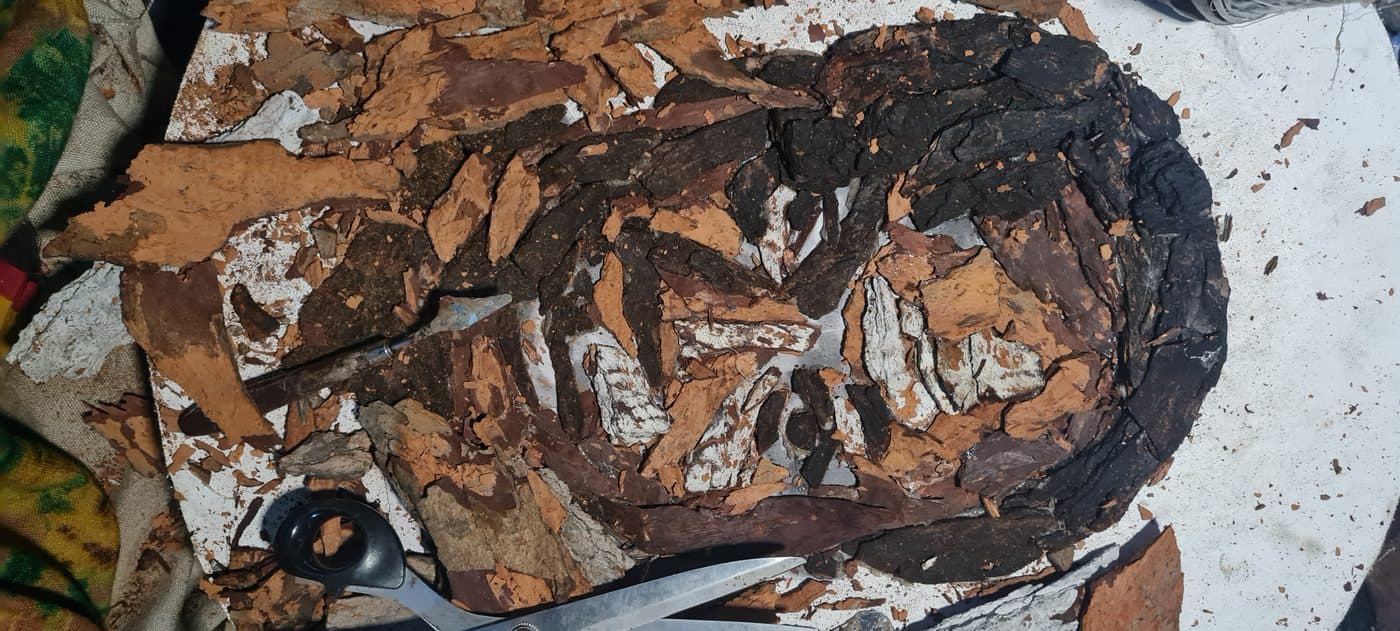
My work begins in cemeteries, where I collect the bark of neem trees — trees that stand witness to decay, to transformation, to reincarnation. I make portraits of fallen trees, of great trees that have toppled, seeing in them the metaphors of ancestors who believed that death is merely a change of state. I weave these materials into human forms, asking the viewer to see themselves in the tree, in the rock, in the river.
If you would not let a human being die, why would you let a forest burn?
When we see ourselves as trees, preservation becomes self-preservation. Empathy for the forest becomes empathy for the self. This is why I make portraits that blur the boundary between human anatomy and botanical form. The tree is not a metaphor for the human. The human is the tree.
I work with recycled plastics, with discarded objects, with the detritus of a throwaway culture imposed upon us. These materials are not merely "waste" — they are evidence of a broken relationship with the earth, a relationship I am trying to mend, one artwork at a time. The plastic remembers the oil well. The bark remembers the tree. The clay remembers the body of Asase Yaa, the Earth herself.
Sustainability, in this light, is not a buzzword and not a policy line. It is the way my ancestors lived for millennia before the word existed: rotational grazing, selective hunting, agroforestry, water conservation — the accumulated knowledge of communities who understood that the land belongs to the living, the dead, and the unborn. My art does not illustrate this. It embodies it. Every choice of material, every site of collection, every form I create is an argument for a way of being that the world desperately needs.
I want viewers to leave my work not with answers, but with questions that unsettle them into awareness. What if the tree is my brother? What if the plastic is my responsibility? What if my ancestors were right?